
New Industrial lands framework in NSW could unlock opportunities for Large Format Retail
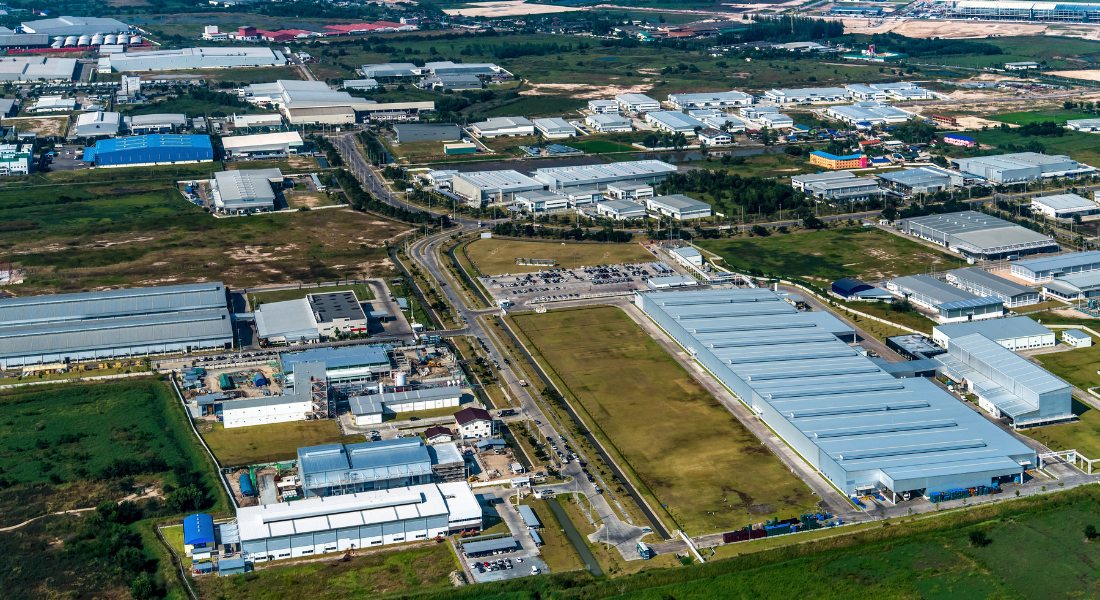
The NSW Government’s new strategic planning framework could create new opportunities for Large Format Retail, with the Statewide Policy for Industrial Lands providing a potential pathway for Large Format Retail development on regionally significant industrial land.
This represents a potentially important opening for the sector, particularly given the strong protections traditionally applied to strategically important industrial land.
Released alongside the final Sydney Plan and NSW State Land Use Plan, the new Industrial Lands Policy establishes a statewide framework for identifying, managing and protecting industrial land according to its State, regional or local significance.
Importantly, the policy contemplates Large Format Retail on regionally significant land where it can be demonstrated that the use does not compromise the industrial function of a precinct.
For the Large Format Retail sector, this could be a significant change. The new framework moves away from a blanket approach to the protection of metropolitan industrial land and instead differentiates the level of protection and flexibility according to the strategic significance and function of individual areas. While it does not provide an automatic pathway for rezoning, it potentially opens opportunities on land that may previously have been difficult to consider for large format retail development.
However, the practical implications will depend heavily on implementation.
The Sydney Plan, which commenced on 13 August 2026, replaces the former Greater Sydney Region Plan and District Plans and establishes a single strategic planning framework across the metropolitan Sydney region.
The Statewide Policy for Industrial Lands will be progressively implemented through regional planning, with industrial land categorised according to its State, regional or local significance.
In addition to the Sydney Plan, the draft Illawarra Shoalhaven Plan is currently on exhibition until the end of September and includes proposed industrial land categorisations, with other regional plans still in the pipeline.
Claire Burdett, Director, Planning, at Colliers Urban Planning, said the new approach represents an important shift from the previous framework for managing industrial land.
“The blanket metropolitan approach to retaining industrial land and not enabling the consideration of alternatives has been replaced by a differentiated system, where the strategic significance of the land determines the degree of flexibility available,” Ms Burdett said.
“For Large Format Retail, the important opportunity is that regionally significant industrial land is not necessarily a complete ‘no’. However, as always, the devil will be in the detail. The Industrial Lands Policy establishes a series of criteria that must be considered before a proposal can progress to rezoning, including strategic and economic alignment, infrastructure and connectivity, and public benefit.
“While the strongest opportunities are likely to be on locally significant industrial land, the potential opening for Large Format Retail on regionally significant industrial sites is significant. For well-located sites where Large Format Retail can demonstrate that it will not compromise the function and operations of adjacent industrial land, the new framework potentially creates opportunities that previously may not have existed.”
For Large Format Retailers, developers and property owners, the key question will now be how the policy is applied in practice by councils and the Department of Planning, Housing and Infrastructure, in a time, where strategic planning has been lagging behind the market.
The Large Format Retail Association will continue to monitor its implementation, including the categorisation of industrial land across regional NSW, and what it means for future investment and development opportunities across the state.