
Associated Projects: Capital productivity, the next competitive advantage in LFR
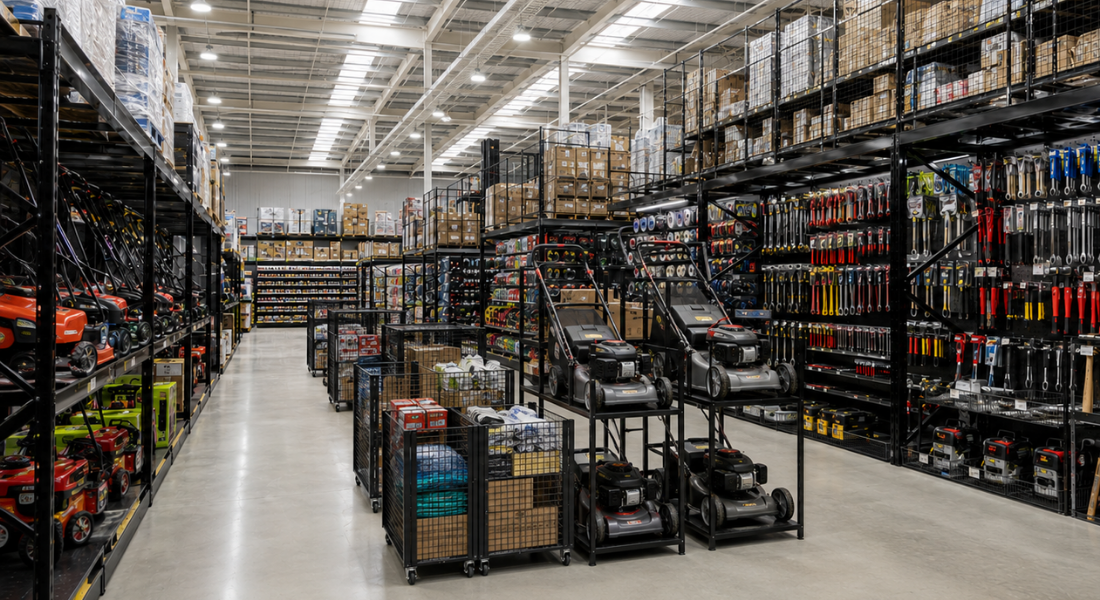
Over recent years, retail has become highly disciplined at managing operating costs. Labour, occupancy, supply chain and inventory have all been subject to intense scrutiny as retailers look for opportunities to protect margins.
However, according to Mark Gale, CEO, Associated Projects, the next competitive advantage may not come from further cost reduction, but it may come from deploying capital more intelligently.
“Across the Large Format Retail sector, we’re seeing a shift in how investment decisions are being framed. The conversation is moving from When do we refurbish? to Where will our next dollar of capital generate the greatest return?” Mr Gale said.
“That is a materially different conversation. In my view, it reflects a more mature approach to capital allocation. The retailers achieving the strongest returns aren’t necessarily those investing the most. They’re the ones becoming increasingly disciplined about where they invest, what problem they’re solving and how the return will be measured.”
From refurbishment cycles to investment decisions
Historically, Mr Gale said retail refurbishment has often followed relatively predictable cycles, with capital allocated once a store reaches a certain age or its environment begins to look tired.
“Full store refurbishments still have an important role. Sometimes the customer experience, operational model or brand proposition requires substantial change,” Mr Gale said. “But increasingly, the strongest return may come from more targeted interventions.
“Rather than asking what needs to be replaced, retailers can start by asking where the greatest commercial friction exists.
“Is conversion being lost at a particular point in the customer journey? Is a category constrained by the amount or type of space allocated to it? Is stockholding limiting availability? Is a fixture creating unnecessary replenishment labour? Is there an opportunity to increase average transaction value?
“Once the problem is clearly defined, capital can be directed much more precisely.”
Small interventions can produce outsized returns
A practical example is impulse merchandising.
“At Total Tools, we’ve introduced queue gondolas to better capture final purchase decisions. Relative to a full store refurbishment, the capital requirement was modest. But the thinking behind the intervention is what matters,” Mr Gale said.
“It identified a specific commercial opportunity within the existing store environment and deployed capital directly against it.”
That principle can be applied much more broadly. A new fixture, improved category adjacency, additional stock capacity, a simplified service area or a change that reduces replenishment time may appear relatively minor when viewed as an individual project.
Across a large retail network, the economics change.
Scale is one of Large Format Retail’s greatest advantages.
An improvement that produces an incremental return in one location can become a meaningful value driver when it is repeatable across 50, 100 or 200 stores.
The same is true of cost savings. A design change that removes only a few minutes from a recurring operational task can create a very different business case when those minutes are multiplied across an entire network and every trading day of the year.
Measure the return, not the amount of change
This also requires us to rethink how we judge a successful refurbishment.
“The most successful project isn’t necessarily the one where the customer can see the greatest amount of change,” said Mr Gale. It may be the one where capital has been deployed most effectively.
“That means looking at measures such as incremental sales, gross profit, conversion, cost to serve, labour productivity and payback period, and establishing those measures before the investment is made.
“Without a clear baseline, it becomes difficult to separate the impact of the refurbishment from everything else happening within the business.
“For leadership teams deciding whether to roll an initiative across a national network, that evidence becomes particularly important.
“A successful pilot shouldn’t simply demonstrate that a concept works. It should demonstrate why it works, what return it generates and whether that return can be replicated at scale.”
Preserve the ability to change
Mr Gale said another dimension of capital productivity that sometimes gets overlooked is flexibility.
“Retail doesn’t stand still. Ranges change, technology evolves, customer behaviour shifts and operating models continue to develop,” he said.
“Capital deployed today shouldn’t unnecessarily constrain what the business can do tomorrow.
“Fixtures that can be reconfigured rather than replaced, infrastructure that accommodates future technology and store environments that can evolve without significant rebuilding all contribute to the longer-term return on an investment.
“Sometimes the lowest-cost solution today can become the most expensive solution to change later. For that reason, capital productivity shouldn’t only be measured by initial cost or immediate payback. The flexibility preserved for the next change also has value.
“Ultimately, I think the next phase of Large Format Retail investment will be less about how much capital is being deployed and more about the quality of that deployment.”
Full refurbishments will remain part of the equation. But alongside them will be smaller, more targeted investments designed around clearly defined commercial and operational outcomes.
For Large Format Retailers, the opportunity is particularly significant because scale magnifies the result.
“Deploy capital intelligently, prove the return and build the solution so it can be repeated,” Mr Gale said. “Those incremental improvements can become meaningful value drivers at group level, and help create more productive, adaptable and resilient store networks.”