
Beyond the box: Inside the 2026 LFRA Overseas Study Tour

Each year, the Large Format Retail Association Overseas Study Tour provides a unique lens into the global future of Large Format Retail.
For more than a decade, Buchan Managing Principal and Sector Lead Phil Schoutrop has been at the heart of it, working with the LFRA to coordinate the tours and helping the industry translate global best practice into local outcomes.
“The Study Tour is about getting out of our own market and seeing what is happening on the ground,” Phil said. “It is about standing in the stores, walking the precincts, talking to managers, hearing from brokers and owners, and observing how customers behave.
“That direct experience is what makes the program valuable. It gives us the chance to test our own assumptions, challenge the way we think about Large Format Retail in Australia, and bring back ideas that can help improve the industry as well as the customer experience.”
A front row seat to global trends and innovation
This year’s tour, spanning Denver and Phoenix, offered delegates an unparalleled look at how the US is redefining the purpose and potential of Large Format Retail. Two very different cities, but together they pointed in the same direction: the future of Large Format Retail is not just about bigger stores or larger sites. It is about creating stronger reasons to return.
“The best examples we visited weren’t necessarily the newest or the biggest,” says Phil. “They were the places with the clearest sense of purpose – whether that was brand immersion, community activation, entertainment or reinvention. They gave people a reason to visit and to stay.”
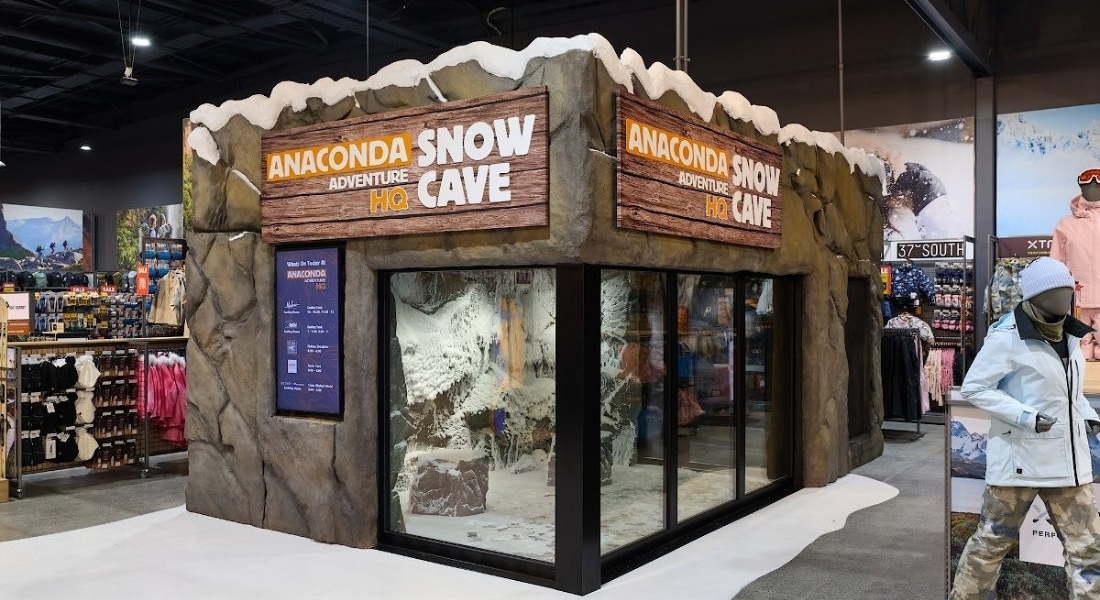
The Study Tour made clear that experience is no longer an optional layer added to retail. In the strongest examples, it is part of the core offer. Stores like REI, Bass Pro and Dick’s House of Sport use scale to create theatre, confidence, demonstration, service and memory, turning the store into part showroom, part learning environment, part community hub and part brand statement.
“Parking, access and convenience remain critical,” Phil notes, “but they are no longer enough on their own. The environment has to work harder.”
 Entertainment, wellness and community as the new anchors
One of the tour’s most thought-provoking moments came at Meow Wolf in Denver, an immersive entertainment destination built around art, technology and storytelling that, in many ways, performs the role traditional retail anchors once played. It gives people a reason to come, it creates dwell time and gives the surrounding precinct a reason to exist.
That idea was also reinforced in precincts connected to sport, wellness and events.
Westgate, the Ball Arena context, Dick’s House of Sport and Life Time at PV/ Paradise Valley Mall all showed how entertainment, recreation and fitness can sit alongside retail and strengthen the broader destination.
This is an important shift. The anchor of the future may not always be a retailer. It may be a fitness club, an immersive attraction, a food precinct, a sports experience, a civic use or a programmed public space.
The question for our market is how we think more broadly about what drives visitation.
Community is also emerging as a retail strategy in its own right. Belmar in Denver – a former mall transformed into a walkable mixed-use town centre – and the ongoing redevelopment of Paradise Valley Mall both demonstrated how underperforming retail assets can be repositioned around streets, public spaces, residential, dining and civic uses.
The most resilient retail assets are not just selling goods. They are serving communities.
They are creating places that people can use in different ways at different times of the day and week.
The lesson for Australia is not that we should copy the theatre of the US model exactly. It is that Large Format Retail has permission to be more engaging, more confident and more memorable.
The role of design thinking
For the Australian market, the lessons from Denver and Phoenix are both timely and relevant. As older centres, Large Format precincts and suburban retail assets look for their next chapter, the opportunity is not simply to refresh façades or adjust tenancy mix. The bigger opportunity is to ask what role these places should play in the life of their communities.
“Good retail is increasingly about reducing friction and increasing confidence,” says Phil. “It’s about designing spaces where customers feel supported, not just sold to, and that starts with the quality of the environment you create around them.”
The 2027 LFRA Study Tour will head to Hong Kong and Seoul.
About Phil Schoutrop
Phil Schoutrop is Principal and Sector Lead for Precincts at Buchan, with more than 25 years of experience in Large Format Retail architecture and design. He has led the LFRA Overseas Study Tour for more than a decade, helping the industry translate global best practice into local outcomes.
At Buchan, Phil has worked with some of Australia’s most significant Large Format Retail operators, including Spotlight, Anaconda, Harvey Norman, HMC, Super Retail Group, IKEA and Bunnings, contributing to the design and delivery of over a million square metres of Large Format Retail across Australia and New Zealand.
*Photos courtesy of Phil Schoutrop, Principal and Precinct Sector Lead at Buchan