
New Member Series: Inside LPA, reducing energy across the retail environment
From lighting design and national store rollouts to smart metering and energy management, LPA works with retailers to reduce energy consumption and improve the performance of their sites.
LPA operates across retail, commercial and industrial environments, bringing together the lighting, metering and energy technology needed to understand where energy is being used and identify practical opportunities to reduce it.
Electrical engineer John Saunders founded LPA in Australia in 1990 as a specialist lighting business. Today, LPA is an international lighting and energy company, employing more than 150 specialists across lighting, technology and engineering. With operations spanning Australia, Asia, the United Kingdom, Europe and the United States, the company has delivered projects across the globe.
For retailers managing multi-site or international portfolios, that reach supports a consistent approach to lighting design, product selection and project delivery. LPA’s regional teams work together to maintain the agreed design intent and performance criteria while responding to local compliance, supply and installation requirements.
The work starts with understanding how the space needs to perform. LPA provides lighting design, photometric modelling, product supply, digital controls and on-site aiming for projects ranging from individual fit-outs to global rollout programs.
The objective is not simply to make a store brighter. It is to direct light where it is needed, supporting product presentation, customer navigation and employee comfort while managing energy consumption and maintenance costs.
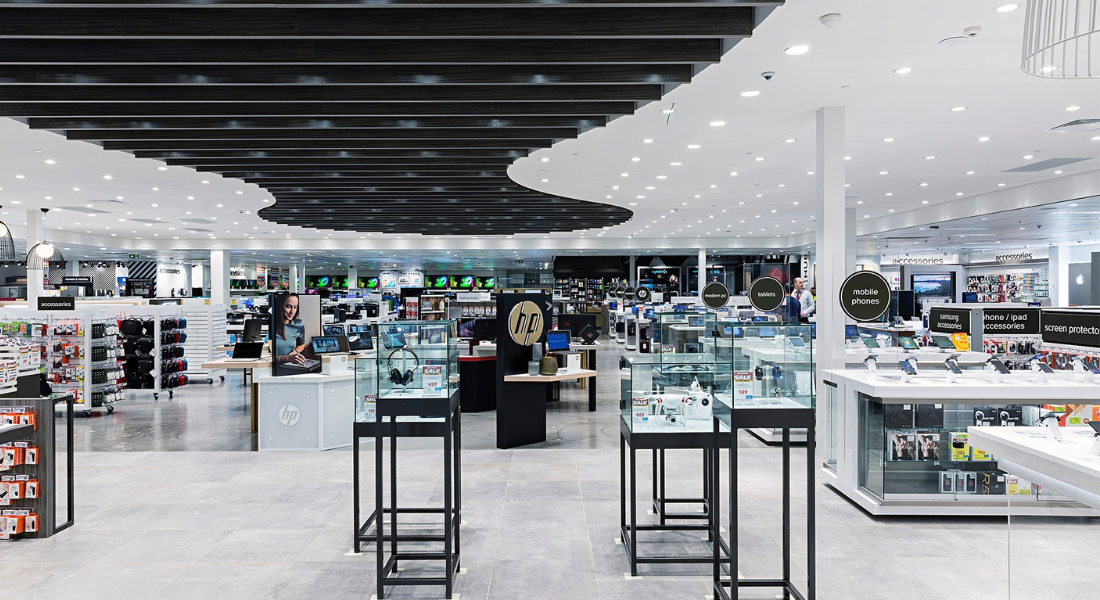
That balance is particularly important in Large Format Retail, where extensive floor areas, high ceilings and long trading hours can make lighting a significant controllable energy load.
Lighting controls can extend the savings by allowing output to be managed according to the area, trading hours and available daylight. LPA works with systems including Casambi and DALI-2 to provide greater control over when and how lighting operates.
For existing stores, LPA also delivers staged relighting programs that replace ageing or inefficient fittings while sites continue trading. This allows retailers to work through a portfolio progressively rather than upgrading every location at once.
Lighting is where LPA began. Metering and energy management provide the visibility needed to find further savings.
LPA supplies smart metering hardware and pairs it with WideSky, its energy and data management platform. Together, they provide a clearer view of where energy is being consumed, when it is being used and how performance varies between sites.
Meters can capture consumption at the main switchboard or individual circuits, allowing loads such as lighting, refrigeration, heating and cooling to be monitored separately. Connected gateways transfer this information from each site, helping businesses collect data across portfolios where infrastructure and site access may vary.
WideSky brings energy and utility information into a single platform. It can combine electricity, gas, water, solar generation, sub-metering, building management systems and connected devices, reducing reliance on separate portals, invoices and spreadsheets.
Interval data can reveal sites operating outside expected hours or using more energy than comparable locations. Dashboards, benchmarking and alerts help operations and facilities teams identify unusual consumption patterns and prioritise areas for investigation.
The same data can support utility bill analysis, tenant cost allocation, internal reporting and sustainability requirements. Importantly, it can also help measure the outcome of completed energy projects.
John Saunders remains directly involved as Executive Chairman, supporting senior client relationships and contract negotiations. His focus on energy optimisation has guided LPA’s expansion from lighting into metering, connected technology and energy management.
“Every dollar spent powering a store affects its operating performance, but many retailers still do not have a clear view of where that energy is going,” Mr Saunders said.
“LPA brings the lighting, metering and energy data together. We can identify where the best opportunities are, implement the right improvements and measure the result. For a multi-site retailer, that means lower operating costs supported by evidence, not assumptions.”
LPA joined the Large Format Retail Association as a Gold Associate Member in August 2026, reflecting its long involvement in retail and continued focus on improving portfolio performance.
“Joining the LFRA gives us an opportunity to share practical insights into lighting design, energy data and energy reduction, while learning more about the priorities shaping the sector,” Ray Marsh, General Manager Australia at LPA said.
“For Large Format Retailers, the challenge is delivering improvements across extensive floor areas and multiple locations while keeping stores trading. That takes careful planning, from selecting the right products to coordinating supply and installation.
“We look forward to working with retailers, developers and industry partners to turn those opportunities into practical outcomes: lower energy consumption, well-presented products and comfortable, visually engaging spaces for customers and employees.”